Every June, without fail, somebody asks the same question:
“Why do we need a whole month?”
And every June, LGBTQ folks everywhere collectively take a deep breath, sip whatever beverage is helping us survive the current political climate, and prepare to explain it all over again.
So let’s start at the beginning.
What does it mean to have pride?
Pride means different things depending on who you ask. Sometimes people use the word pride as a compliment. Other times they use it as criticism.
“You’re too prideful.”
“Check your pride.”
“Your pride is getting in the way.”
And sure, there are situations where pride can become ego. But that’s not the kind of Pride we’re talking about.
Pride Month is something entirely different.
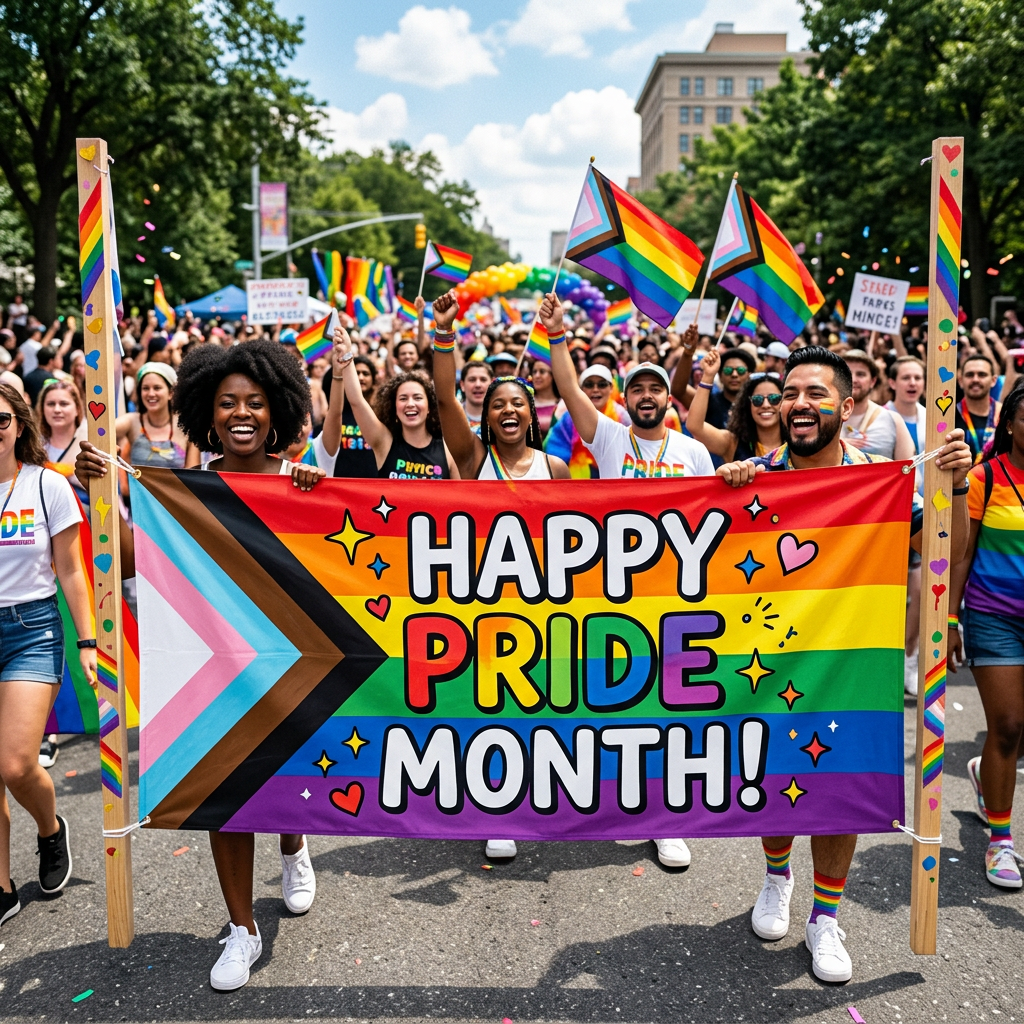
June is recognized as LGBTQ Pride Month because it commemorates the Stonewall Uprising in 1969, when LGBTQ people fought back against police harassment and discrimination at the Stonewall Inn in New York City. Those protests became a catalyst for the modern LGBTQ rights movement.
In other words, Pride didn’t begin as a party.
It began as resistance.
It began because people got tired of being told they were less than, unacceptable, invisible, or illegal.
And honestly, that history matters now more than ever.
Pride as a Black Queer Person
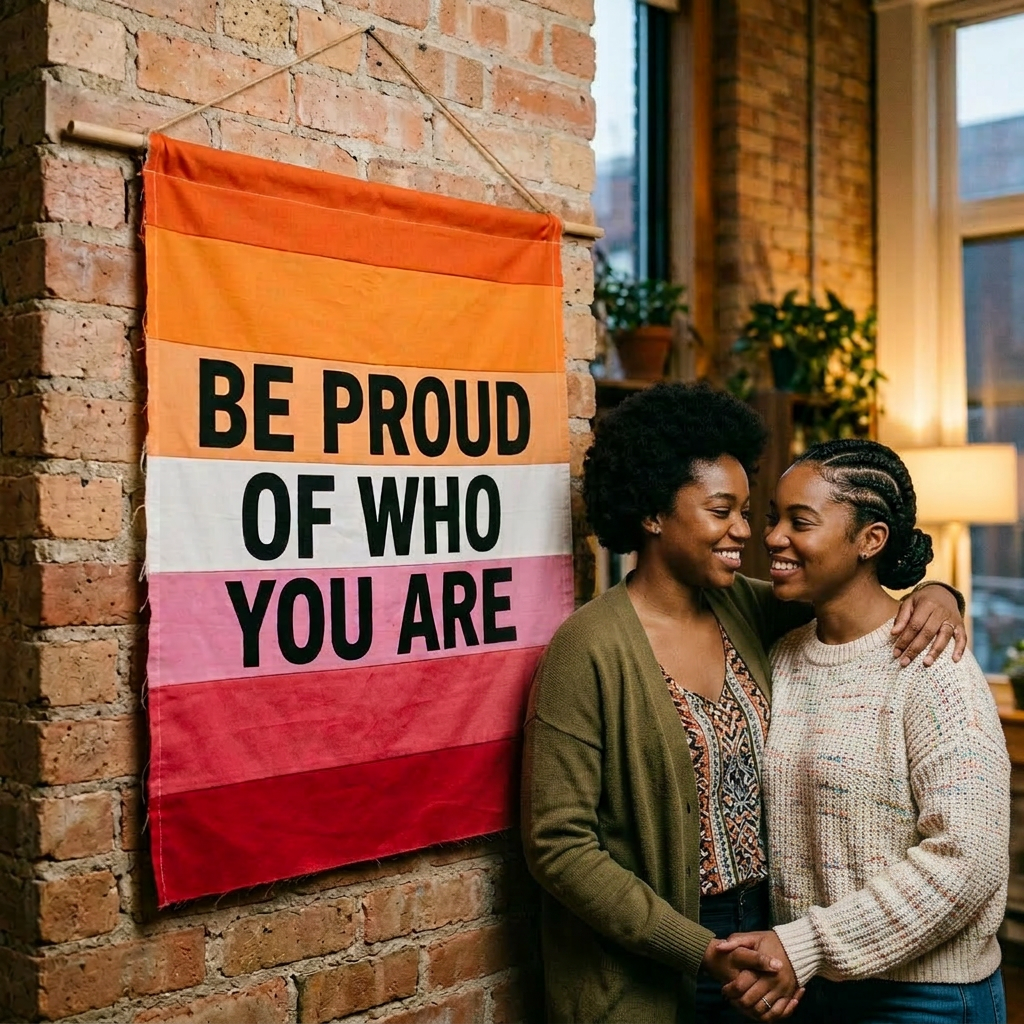
As a Black Lesbian, Pride feels deeply personal.
It’s not just about rainbow flags and parades.
It’s about existing authentically in a world that often asks you to choose which part of yourself is acceptable.
Black.
Lesbian.
Woman.
Some people are uncomfortable with one of those identities.
Some people are uncomfortable with all three.
And yet here we are.
Pride is the decision to show up anyway.
It is the freedom to walk through the world as your full self without apologizing for taking up space.
That may sound simple, but for many people it is revolutionary.
There are people who can hold their partner’s hand in public without thinking twice.
There are people who never worry whether their marriage rights could be challenged.
There are people who never have to calculate whether a neighborhood, workplace, church, or family gathering is safe for them.
Many of us don’t have that luxury.
And that’s why Pride matters.
Why Do We Keep Showing Up?
Every year there are people who complain about Pride celebrations.
Some don’t understand them.
Some actively oppose them.
And some seem to have forgotten what it is we’re actually celebrating.
Because despite what certain cable news commentators might tell you, Pride is not simply an excuse to wear glitter and dance in the streets.
Although, for the record, I fully support glitter and dancing in the streets.
Pride exists because community matters.
It exists because visibility matters.
It exists because there are still young people wondering if they belong.
There are still people sitting alone believing they are the only one.
There are still families struggling to accept their LGBTQ children.
There are still lawmakers introducing legislation that directly targets LGBTQ communities.
Visibility saves lives.
Representation matters.
Community matters.
Pride Is More Than a Parade
Let’s address the elephant wearing sequins in the room.
Whenever Pride Month rolls around, somebody inevitably points to a parade photo and says, “See? This is why people don’t take Pride seriously.”
And every year I want to gently remind folks that one person’s outfit is not the entire LGBTQ movement.
Pride is not about flaunting sexuality.
For most people, Pride is about affirmation.
It’s about finding people who understand your lived experience.
It’s about celebrating survival.
It’s about honoring those who fought before us and supporting those who are still struggling today.
It’s about creating spaces where people can finally exhale and say:
“There are people here who understand me.”
And honestly, in a world that feels increasingly divided, isolated, and hostile, that kind of belonging is powerful.
What Pride Means to Me
Pride means refusing to shrink myself to make other people comfortable.
It means honoring those who paved the way for the freedoms I enjoy today.
It means standing with those whose rights are still under attack.
It means celebrating joy while remaining committed to justice.
It means understanding that visibility is not vanity.
It’s survival.
It’s community.
It’s resistance.
And it’s love.
So if you’re wondering why Pride still matters in 2026, the answer is simple:
Because there are still people fighting for the right to live openly, safely, and authentically.
And until that fight is over, Pride will always be more than a parade.
It will be a reminder that we are here, we belong, and we’re not going anywhere.